
Publication archive
Identification of KITs and KLTs
Insight into a published application or lecture from the CRETEC archive.
Archive content: Information refers to the original publication status. Please coordinate current execution, scope of services and availability with CRETEC.
Identification of KITs and KLTs
Project type:
Artificial Intelligance
Date
2019
Objective for image processing:
General:
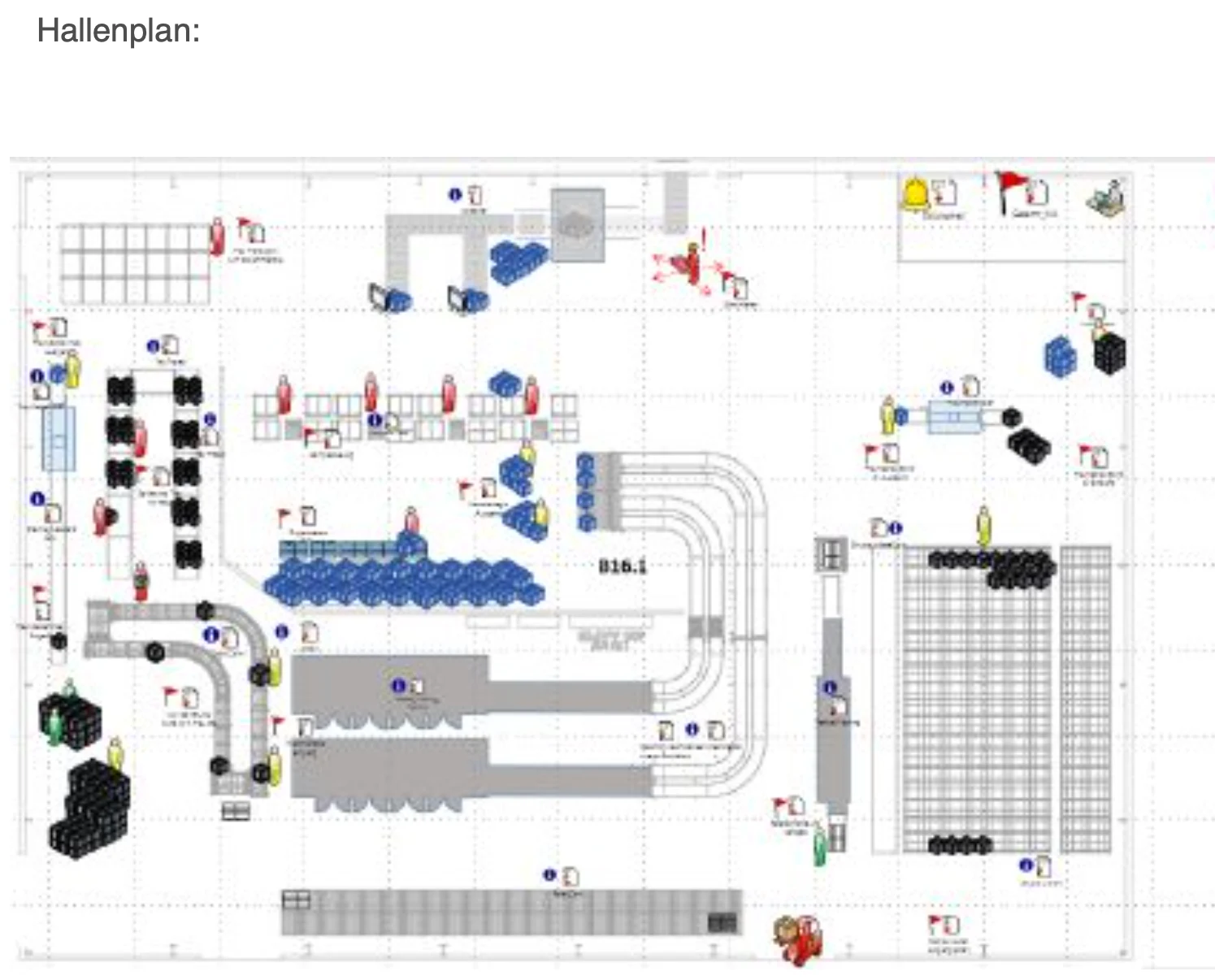
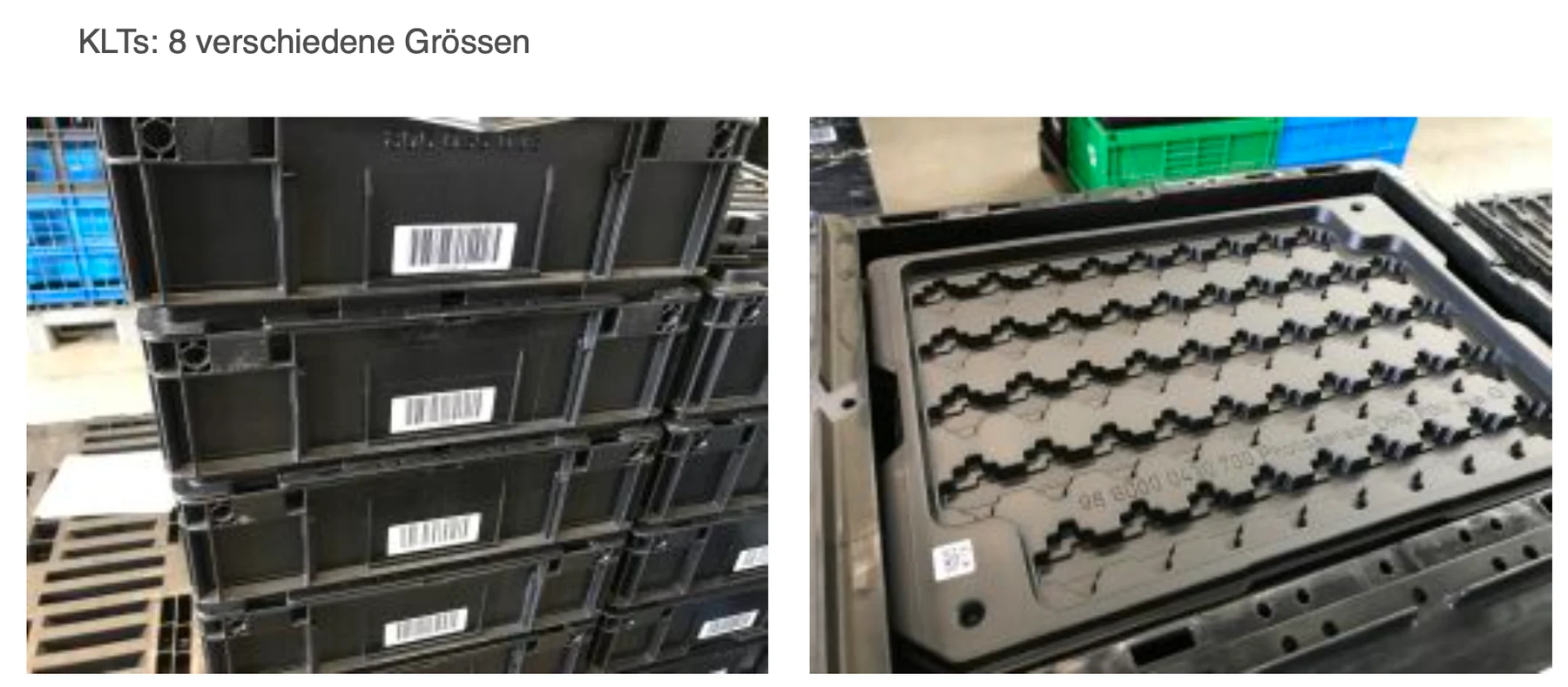
Various KLTs and trays are delivered by lorry from different customers.
The KLTs and trays are separated by workers and cleaned by the customer with various technical requirements.
After cleaning, these are remarried and are to be sorted on pallets in pure variety, stretched with foil and stored.
The aim is to obtain pure pallets during storage, which are precisely recorded in the software so that they can be updated on the network.
The number varies constantly, as different customers pick up the cleaned, palletized goods again.
Furthermore, the customer also internally accesses the warehouse.
Since in the past it was not really possible to determine the current stock, a system is now to be introduced which currently determines the stock in order to record the exact stock (to e.g. E.g. Avoid empty journeys.
Among other things, the truck driver should be able to see on a screen whether the requested goods have already been completely cleaned and stored.
STRUCTURE IN DETAILED DESCRIPTION:
Station 2: container/tray pairing
KLT containers and trays are paired at this station.
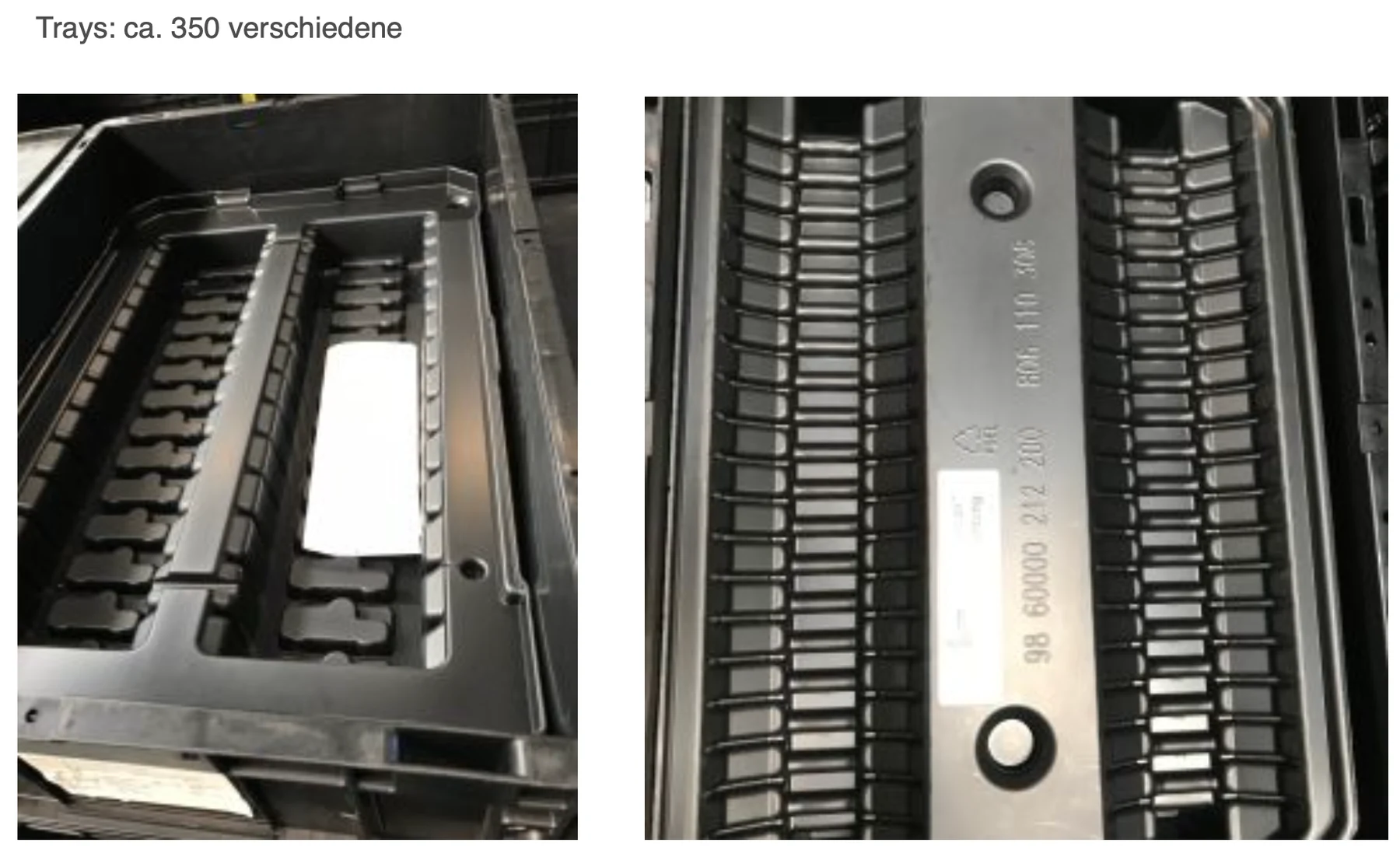
In this case, the trays are automatically identified and recognized by placing them on the belt on the tray master before or after cleaning (approx. 350 different types
In the station, therefore, the trays that are currently being driven on the system should be automatically recognized.
This information should then be created as an EAN code and a sticker printed on a label printer.
An input / selection of a worker on a screen is not practical, because the time required is too great and errors should be reliably prevented.
Therefore, we recommend the use of an independently learning neural network that ensures recognition after learning the parameters.
Another advantage of this technology is the simple teaching of additional new parts or deviating trays, which is easy to implement for future recognition.
The CRETEC QBIC machine vision cell is positioned above the conveyor and shielded from ambient light to provide optimal detection conditions.
Request for this application →