
CRETEC · Machine Vision · Robotics · AI
QBIC Wheels – optical surface inspection of aluminium wheels
QBIC Wheels by CRETEC GmbH inspects cast and forged wheels for scratches, coating defects, inclusions, pores and contamination. It supports painted, diamond-cut, polished and unfinished aluminium surfaces.
The linked brochure includes a previously published application result. Current cell cycles and line takt times are described on this page.
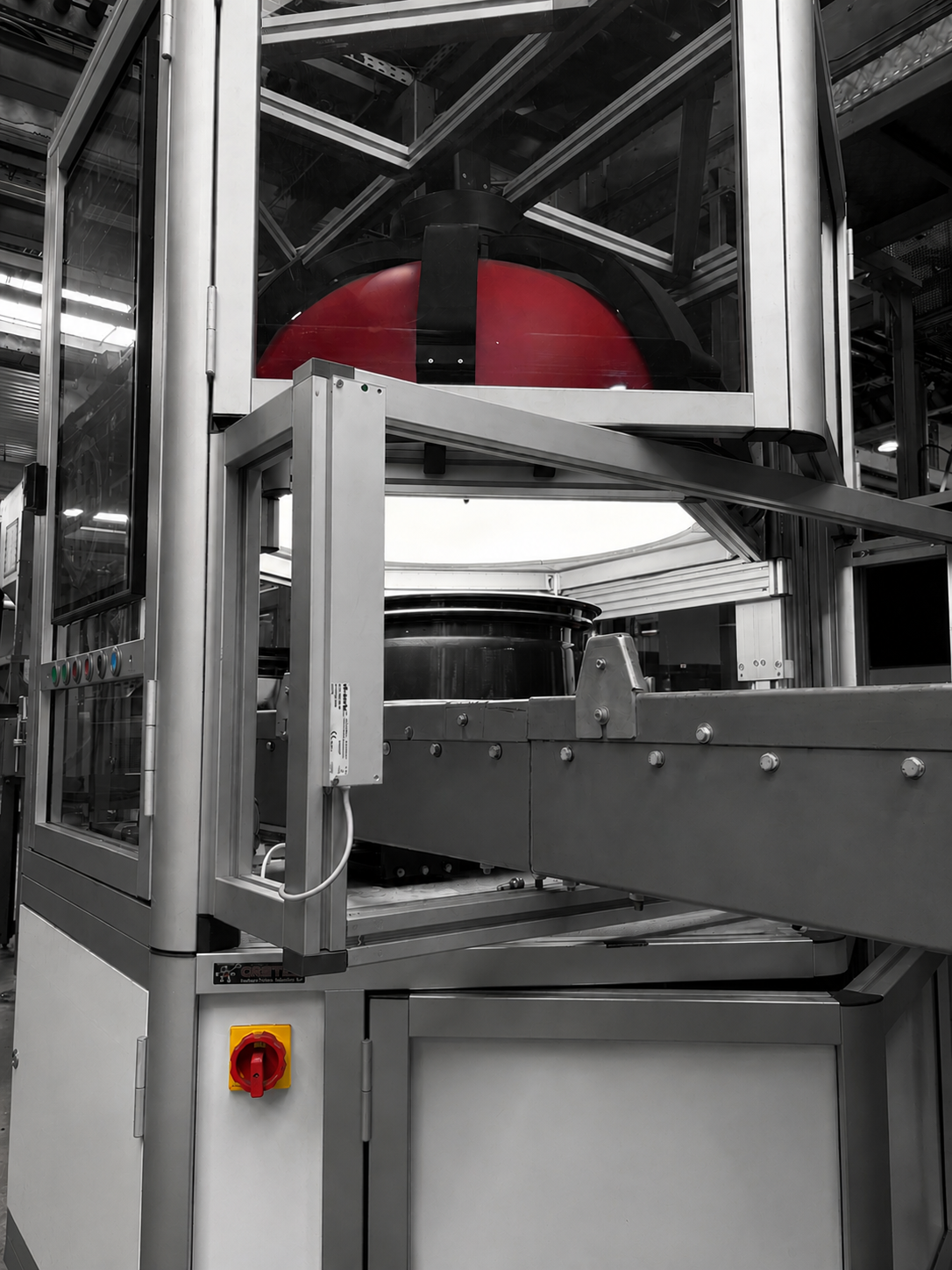
QBIC Wheels
Technical specifications
- Wheel diameter
- 14–26″
- Wheel weight
- Up to 30 kg
- Cycle time per cell
- 10 seconds
- Parallel operation
- A line takt of 5 seconds or less using multiple parallel QBIC cells, depending on cell count and line design.
- Wheel types
- Cast and forged aluminium wheels
- Image data
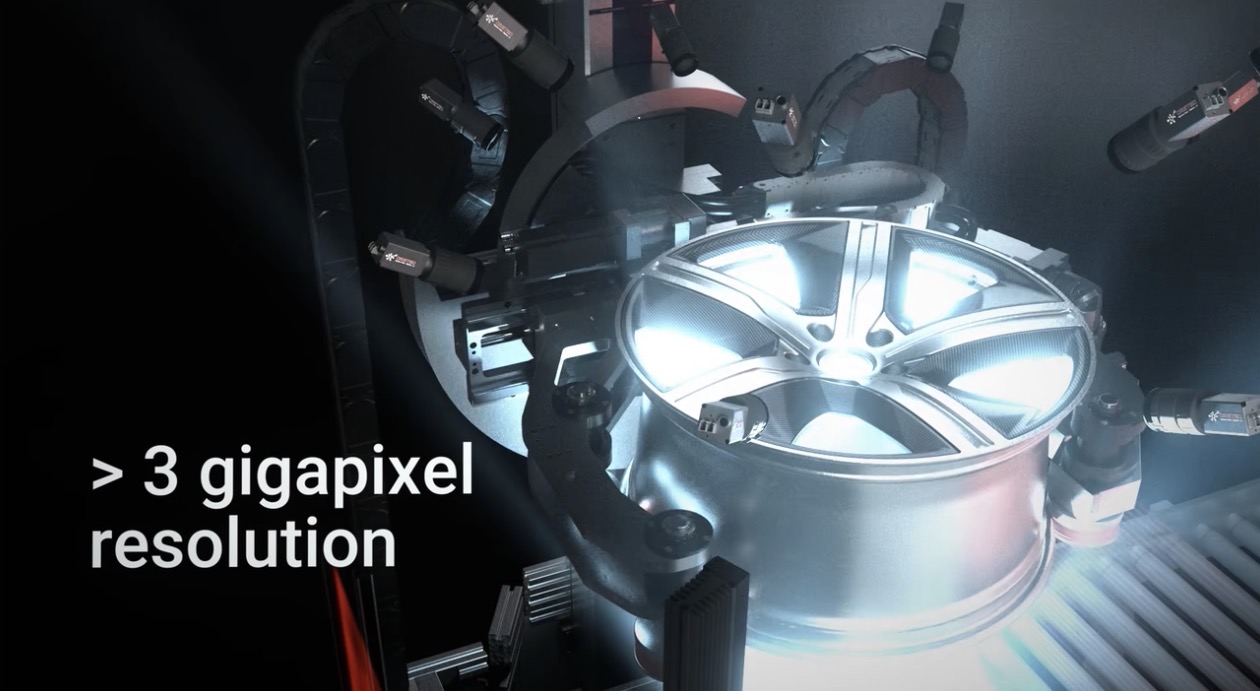
- More than one gigapixel per wheel
- Surfaces
- Painted, diamond-cut, polished and unfinished.
- Inspection areas
- Front, rear, rim barrel and spaces between spokes.
- Detected defect types
- Scratches, coating defects, inclusions, pores and contamination.
Inspection criteria and validation
Defect thresholds, detection performance and false rejects are evaluated using representative wheels and agreed quality criteria. Inspecting every wheel does not imply a guarantee of detecting every defect.
System in operation
Technical details
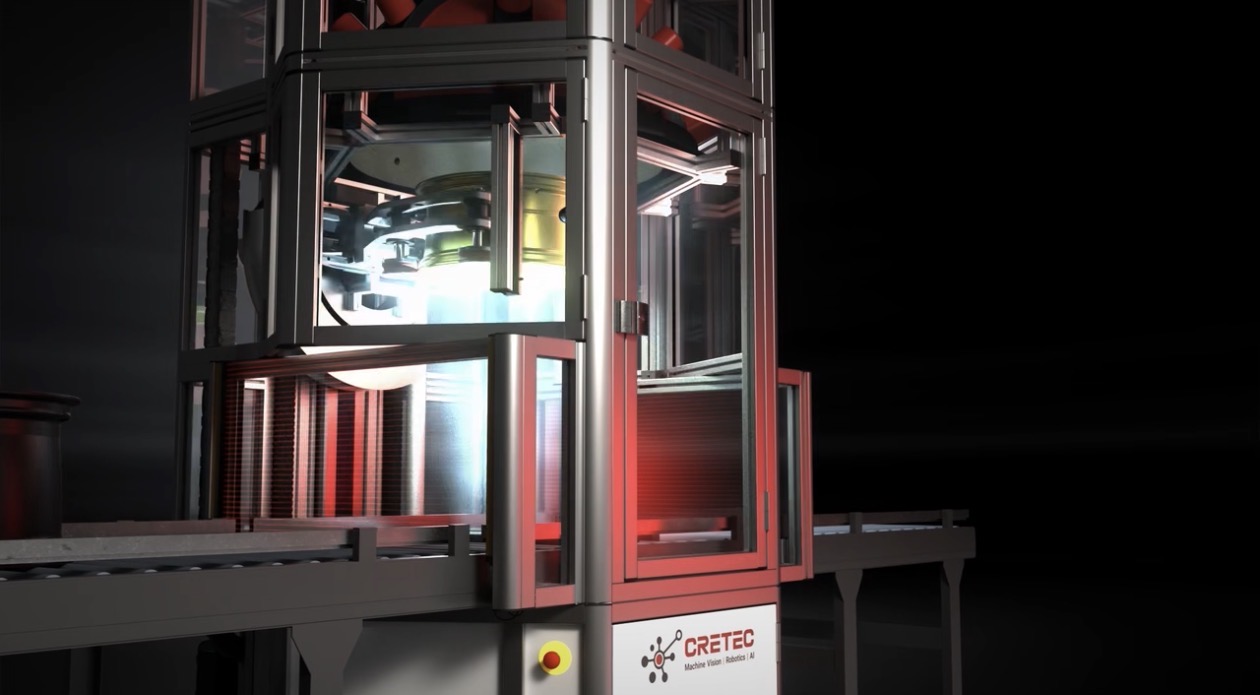
From conveyor to inspection result
Receive the wheel
Infeed, part identification and inspection recipes are coordinated with the production line.
Capture the surfaces
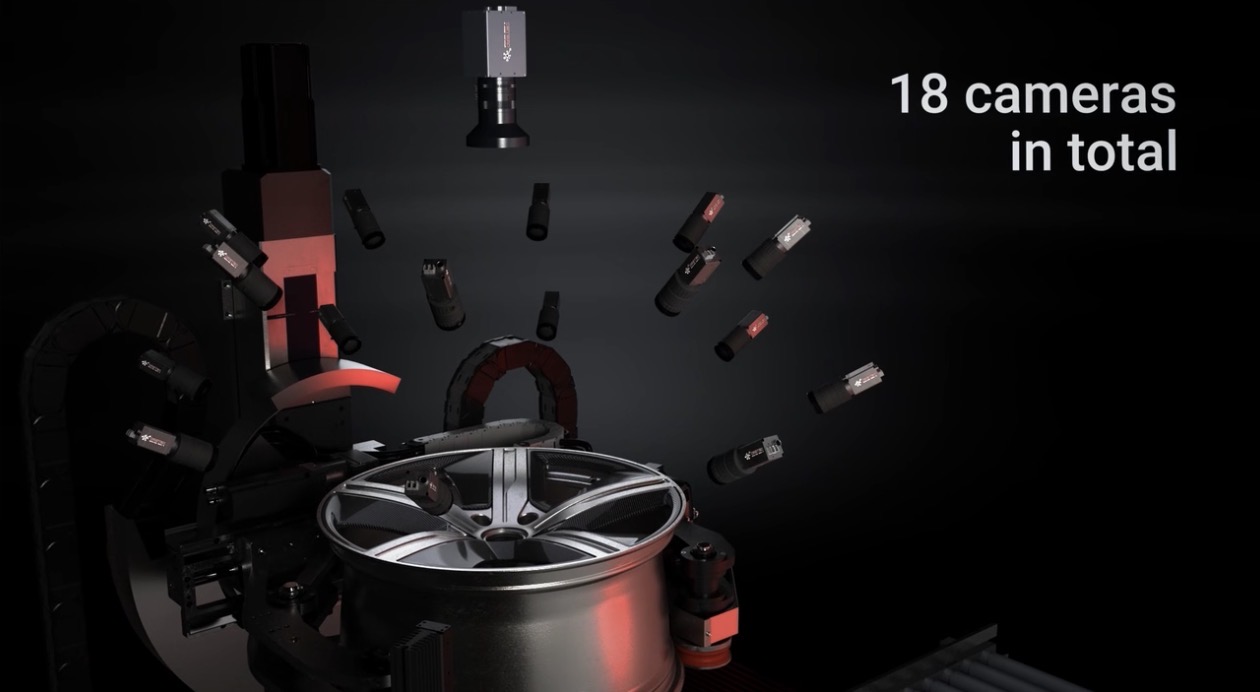
Multiple camera perspectives and coordinated flash illumination capture the inspection areas.
Detect and measure defects
Deep learning classifies defects. Classical machine vision measures defect dimensions and evaluates them against the agreed OEM rules.
Transfer the result
Results are transferred to the line controller. Image data, traceability and MES/QM connectivity are integrated for each project.
Integration into your production line
PLC communication, interlocks and inspection results are coordinated with your line. OPC UA, image storage and MES/QM connectivity are implemented according to the agreed interface scope.
Throughput matched to your line
A 10-second cell cycle corresponds to a theoretical maximum of 360 wheels per hour. Two parallel cells allow a theoretical maximum of 720 wheels per hour. Actual line output depends on infeed, outfeed and availability.
QBIC Wheels: frequently asked questions
Does QBIC Wheels support cast and forged wheels?
Yes. QBIC Wheels inspects aluminium wheels made by either process, from 14 to 26 inches and up to 30 kg.
Which surfaces and areas are inspected?
Painted, diamond-cut, polished and unfinished surfaces. Inspection covers the front, rear, rim barrel and spaces between spokes.
How is a 5-second line takt achieved?
Each cell has a 10-second cycle. Multiple cells operating in parallel increase total throughput. With suitable line design, inspected wheels can leave the system at intervals of 5 seconds or less.
How are defects evaluated?
AI detection is combined with rule-based measurement. Defect classes, permitted dimensions and OEM rules are agreed with your quality team and evaluated on reference wheels.
A good solution starts with a conversation
Send us wheel sizes and variants, relevant defect examples, your target line takt and planned layout. Together we define the inspection process.
Contact