
CRETEC · Application insights
Surface inspection of reflective aluminium wheels
Painted, diamond-cut and polished wheels place different demands on imaging. QBIC Wheels coordinates camera perspectives and flash illumination for optical surface inspection of aluminium wheels.
CRETEC GmbH · 02.10.2026
Why is imaging critical?
On reflective surfaces, a feature changes appearance with viewing and illumination direction. An image therefore needs to represent both the surface and the target deviation sufficiently. Material, geometry and defect characteristics are considered together during system design.
Image analysis can only work with information actually captured in the images. Trials using real wheels and representative defects are the starting point for a suitable imaging configuration.
Which surfaces does QBIC Wheels support?
QBIC Wheels supports painted, diamond-cut, polished and unfinished aluminium surfaces on cast and forged wheels. Inspection tasks include scratches, coating defects, inclusions, pores and contamination. Different surfaces and wheel variants are considered in the inspection configuration.
Multiple views and coordinated flash illumination
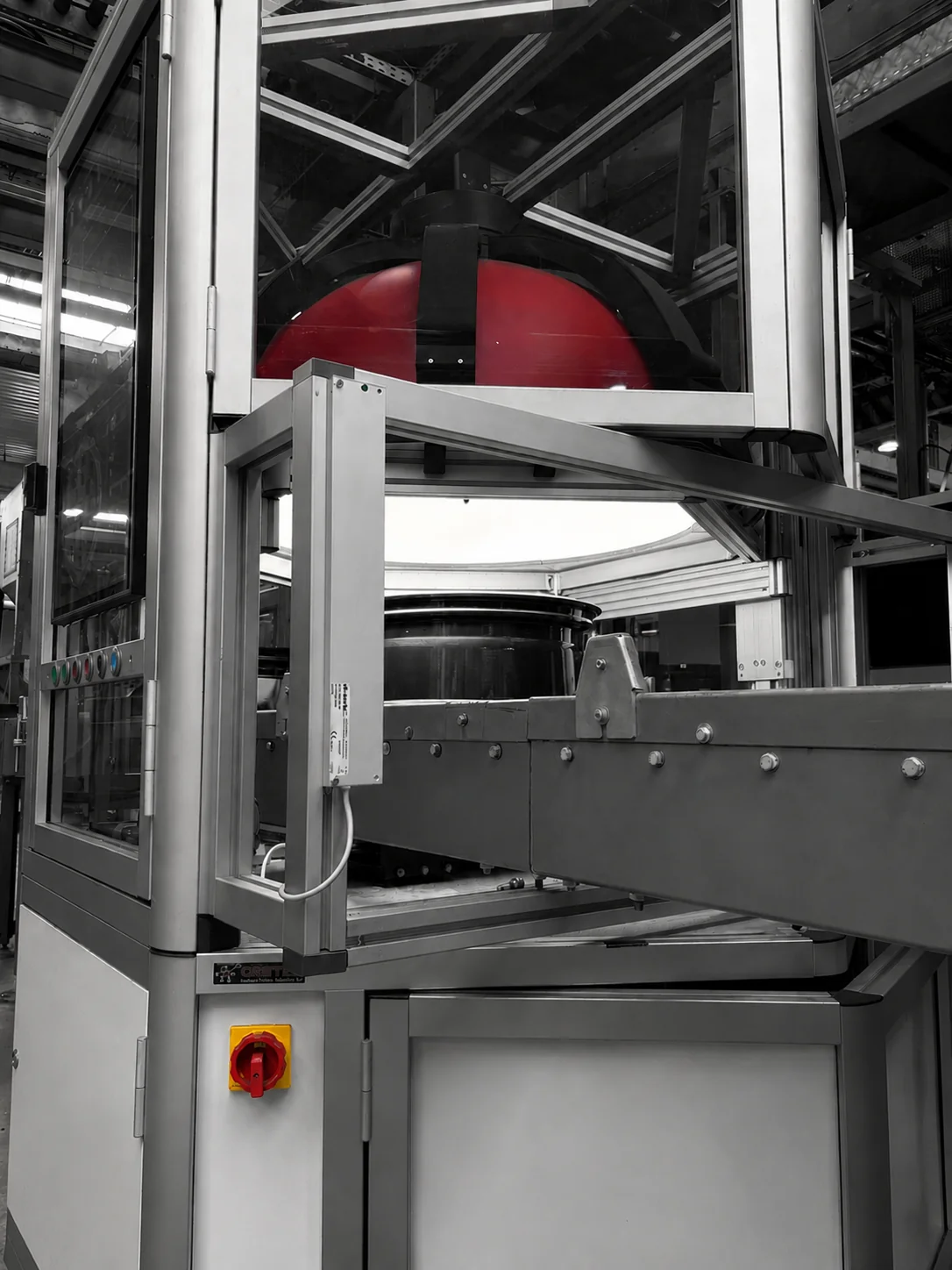
Multiple camera perspectives capture the front, rear, rim barrel and spaces between spokes. QBIC Wheels uses flash illumination with more than 100 A. Illumination, optics, acquisition timing and perspective work together as part of the inspection system.
More than one gigapixel of image information per wheel describes the imaging data volume. It does not establish a guaranteed minimum detectable defect size by itself: imaging scale, contrast and surface geometry also need to be considered and validated.
AI detection and measurable quality rules
Deep learning detects and classifies relevant deviations. Classical machine vision measures defect dimensions. Decisions are evaluated against the agreed rules of the relevant OEMs, linking defect detection to assessment of whether a defect is acceptable.
Which samples should be tested?
- Real surface variants and different wheel geometries.
- Good wheels with acceptable machining and surface features.
- Defective wheels with relevant defect types and characteristics.
- Boundary samples close to agreed quality limits.
- Variants occurring in the planned production process.
Samples should be assessed with the quality team. Detection performance and incorrect decisions must be evaluated for the specific application; this does not establish a blanket guarantee for every defect on every surface.
From trials to integrated inspection
After sample evaluation, inspection scope, quality rules, wheel infeed and interfaces are agreed. QBIC Wheels supports 14–26 inches, up to 30 kg and a 10-second cycle per cell. Parallel operation can reduce line takt to 5 seconds or less, depending on line design.
Related applications
Design your inspection process together
Send us wheel variants, defect examples and your target line takt. We agree the inspection scope and quality criteria with you.
QBIC Wheels: specificationsDiscuss your inspection task