
CRETEC · Application insights
Automated end-of-line wheel inspection in production
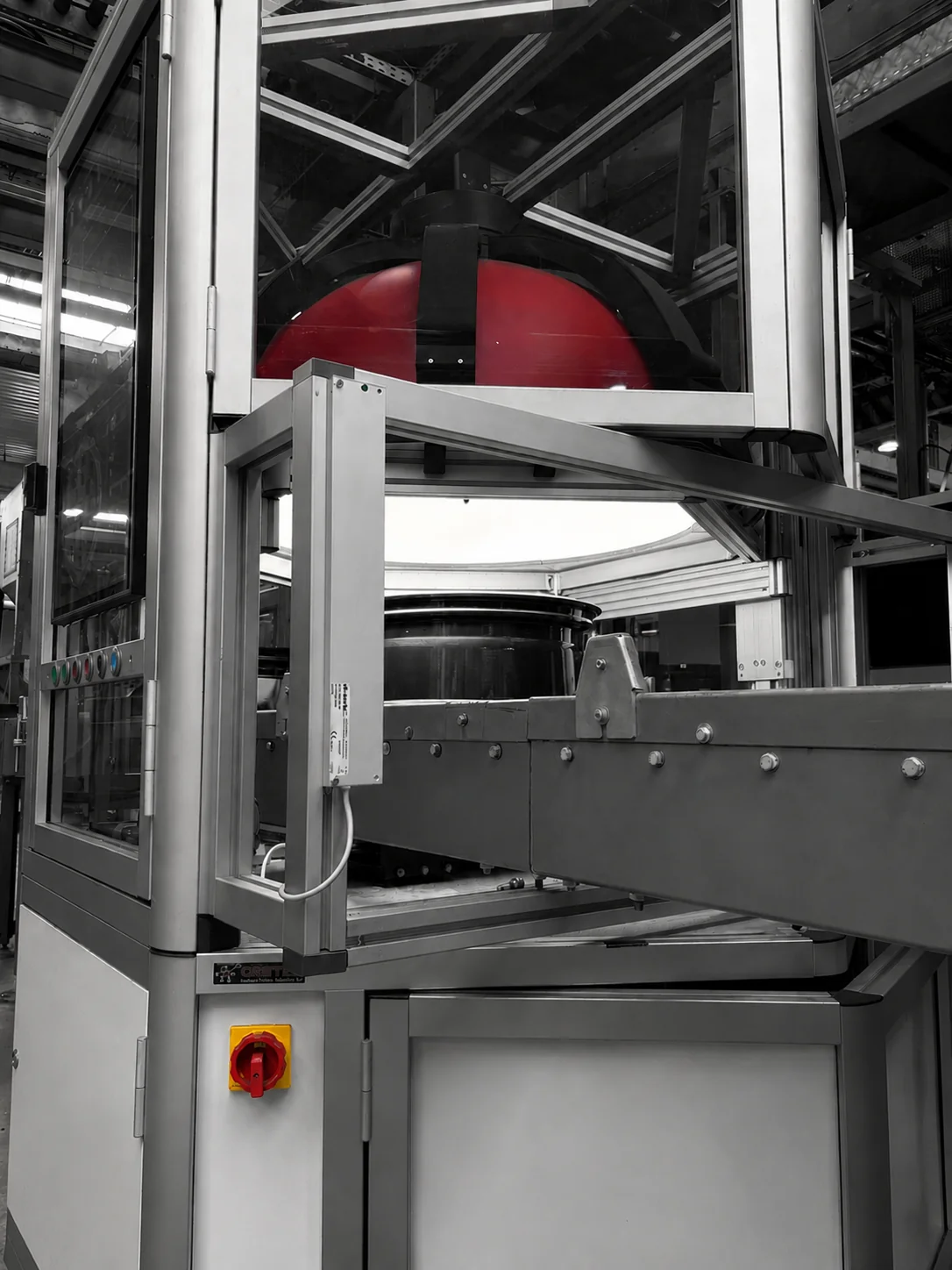
Automated end-of-line inspection must match wheel flow, quality requirements and line control. QBIC Wheels inspects aluminium wheel surfaces and transfers the results to the production process.
CRETEC GmbH · 02.10.2026
When should automated final inspection be considered?
Automated inspection should be evaluated when every wheel needs to be assessed against the same documented criteria within a defined production takt. The decision should be based on current inspection effort, relevant defects, incorrect decisions and rework.
Return on investment depends on the specific production environment. A meaningful calculation includes investment, integration, operation, maintenance, staffing and the actual effect on rework and customer complaints.
10 seconds per cell: what does that mean for the line?
One QBIC Wheels cell has a cycle time of 10 seconds per wheel, corresponding to a theoretical maximum of 360 wheels per hour. Two parallel cells correspond to a theoretical maximum of 720 wheels per hour and, with suitable line design, can enable a 5-second output takt. Additional cells can increase total capacity.
These figures describe theoretical capacities. Actual output depends on infeed, outfeed, availability and distribution between cells. Each individual cell retains its 10-second cycle.
Define interfaces before integration
- How are wheel type and inspection order transferred?
- Which permissions and interlocks are required between line and cell?
- How are pass, fail and technically unavailable inspection results handled?
- Who controls rejection, reinspection and restart?
- Which data are required for MES, quality management and traceability?
PLC communication, OPC UA, image storage and MES/QM integration are implemented to the agreed interface scope. A protocol name alone is not a substitute for an agreed description of data and process behaviour.
Inspection decisions and traceability
QBIC Wheels combines AI detection with rule-based measurement. Defect classes and permitted dimensions are defined with the quality team. For traceability, wheel identity, inspection configuration and result should be linked. The scope and retention of image data are agreed for each project.
Acceptance with real material flow
Acceptance should cover the agreed wheel variants and defect examples together with actual transfer processes. In addition to detection performance, check cycle time, restart, variant changes and handling of missing or uncertain results. Acceptance based only on individual example images does not fully cover these line requirements.
QBIC Wheels technical scope
Cast and forged wheels, 14–26 inches, up to 30 kg. Inspection covers the front, rear, rim barrel and spaces between spokes. Suitable for painted, diamond-cut, polished and unfinished aluminium surfaces.
Related applications
Design your inspection process together
Send us wheel variants, defect examples and your target line takt. We agree the inspection scope and quality criteria with you.
QBIC Wheels: specificationsDiscuss your inspection task