
Publication archive
Manufacturing and quality inspection of automotive turned parts
Insight into a published application or lecture from the CRETEC archive.
Archive content: Information refers to the original publication status. Please coordinate current execution, scope of services and availability with CRETEC.
 Enlarge the image ↗
 Enlarge the image ↗
 Enlarge the image ↗
 Enlarge the image ↗
 Enlarge the image ↗
 Enlarge the image ↗
 Enlarge the image ↗
 Enlarge the image ↗
 Enlarge the image ↗
 Enlarge the image ↗
 Enlarge the image ↗
 Enlarge the image ↗
 Enlarge the image ↗
Manufacturing and quality inspection of automotive turned parts
Project type:
Automatisation
Date
2019
1 Requirement
The customer manufactures complex turned and milled parts with machines. For an automotive customer, turned parts, after they have fallen from the turning/milling center into a coolant bath, are now to be removed fully automatically, dried and checked. In addition, these turned parts are to be checked again in a separate station for the correct type and number of pieces after silvering.
Station1:
Control should be carried out on: - correct diameter
- Freedom from chipping
- Correct length
One of these machines will now be automated, from turning to packaging. Each week, approximately 20,000 parts produced on the machine.
The background of the automation is that the parts under inspection on the machine are sent back / faulted more often, because there are allegedly wrong types in the deliveries. For this reason, the sorting currently makes a 1.5 employee.
In order to shift the obligation of proof to the customer side. If the customer requires a test protocol for the production process.
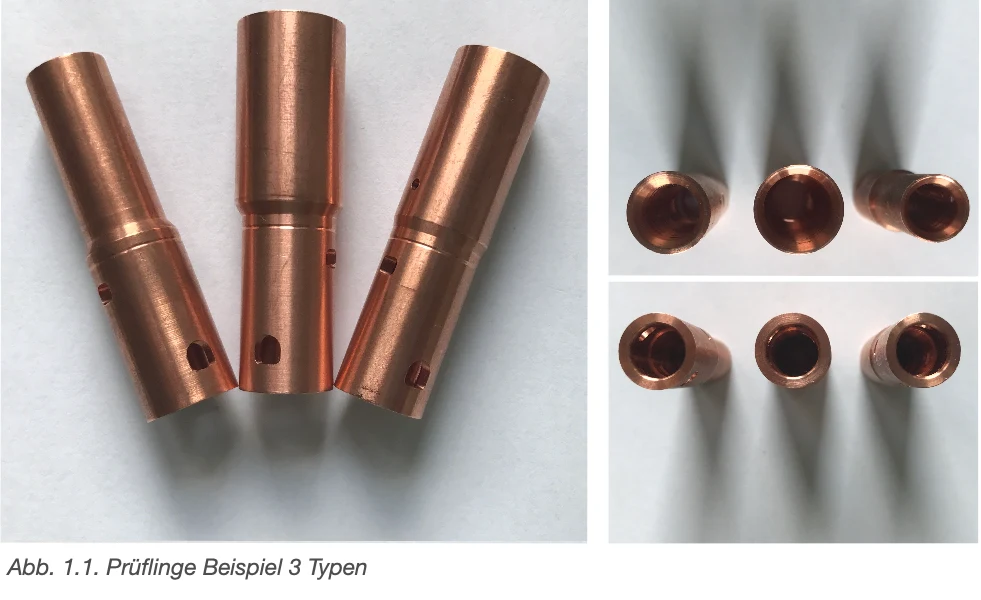
With regard to the parts under inspection per se, it should be stated that they differ only on one side in diameter and on the outer internal corrosion. These parameters shall also be used to determine and sort the type (see Figure 1.1.).
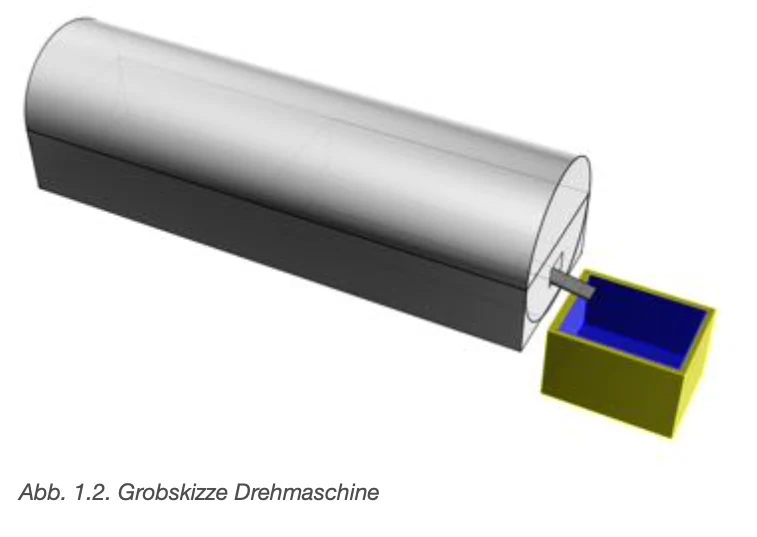
The actual situation of the manufacturing process is as follows. In Figure 1.2. you can see the rough construction of the machine. When the parts under inspection have been rotated, they fall into a small yellow box with liquid (working step 1).
The part under inspection is then removed by a worker, blown dry (working step 2) and at the same time checks whether there are chips in the interior (working stage 3). Subsequently, the worker equips a predefined transport box (work step 4) with the parts under inspection (prevention of scratches).
This now goes to silvering.
Station 2
The turned parts return as bulk items in bags of 500. They are currently placed in a gauge manually to check their type and height, then counted and repacked in a bag.
Station 1
Working step 1 (removal)
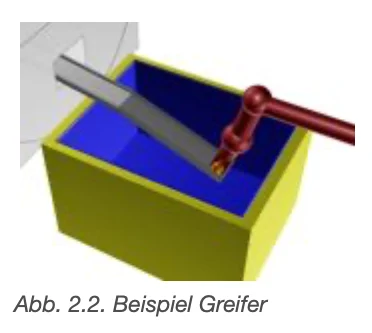
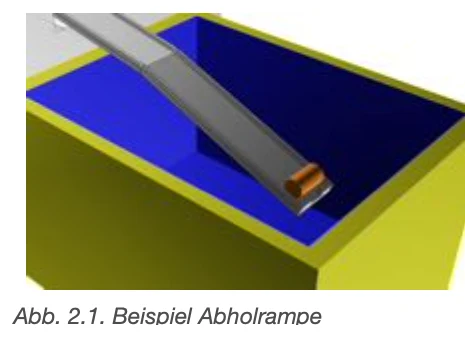
This must be solved in such a way that the parts under inspection land at a defined position in the water so that they can be gripped by a robot (see Figure 2.2.). For example, you could create a ramp with a recess so that the part under inspection rolls to a stop and would then lie on the wall in a defined manner. (See Figure 2.1.)
Working step 2 (drying)
Fig. 2.2. Example of grippers
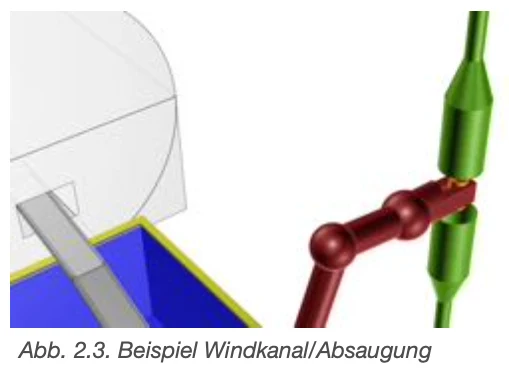
The part under inspection is rotated by the robot and held in a type of wind tunnel/extraction (see Figure 2.3).
Working step 3 (chip and type test)
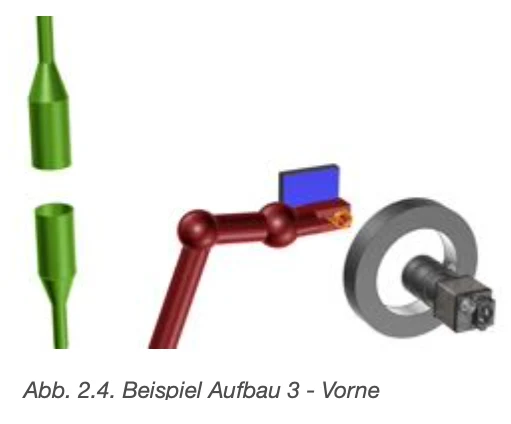
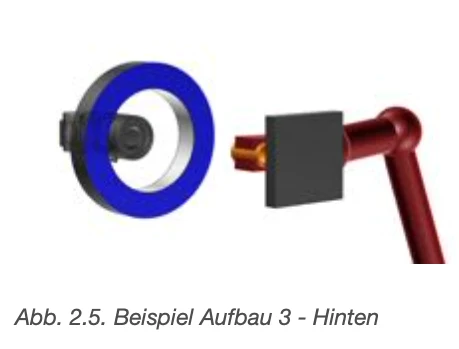
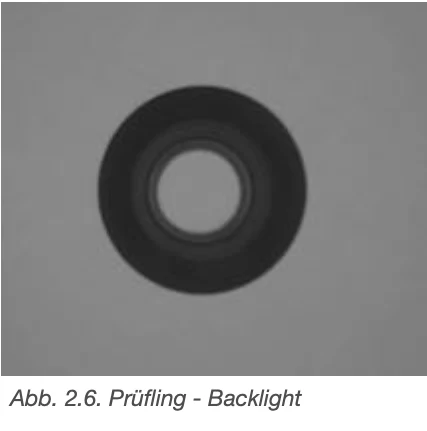
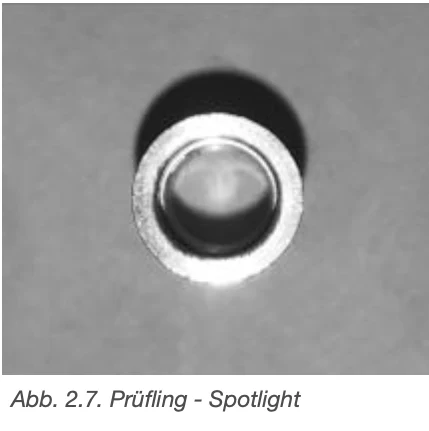
The part under inspection is rotated by the robot and held in front of the camera. Here, the type with reflected light is determined and whether chips in the part under inspection (process per side) are checked (see Figure 2.4.-2.7).
Working step 4 (assembly)
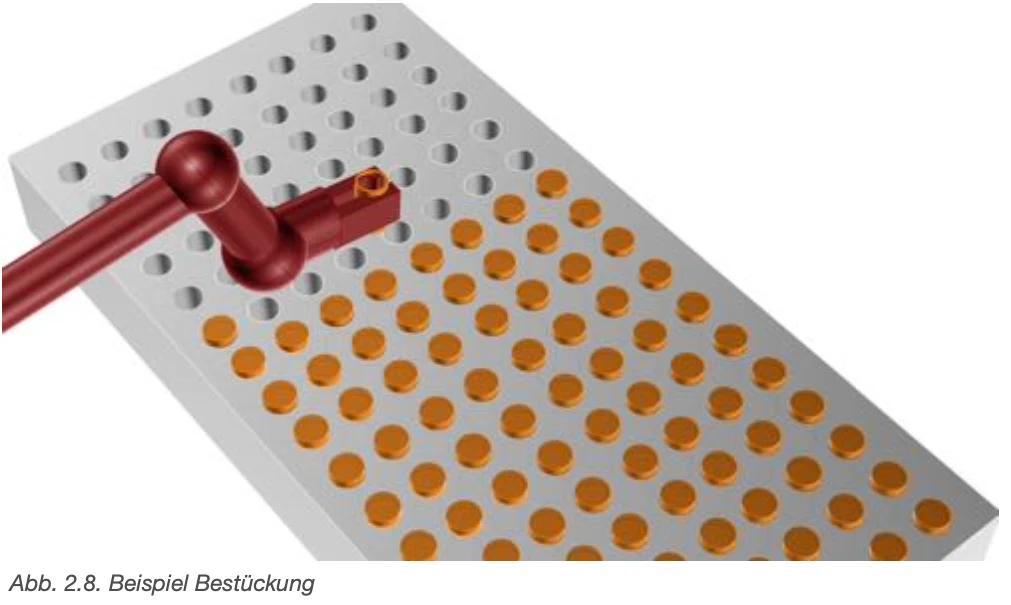
Depending on the rotation of the part under inspection, it is now placed in the transport box. At the same time, the robot remembers where it has already placed parts under inspection and always takes the next nest. (See Figure 2.8.)
When the transport box is full, a message/signal is given and the employee has to change the box or a slider opens and a new empty box moves forward for assembly.
Station 2
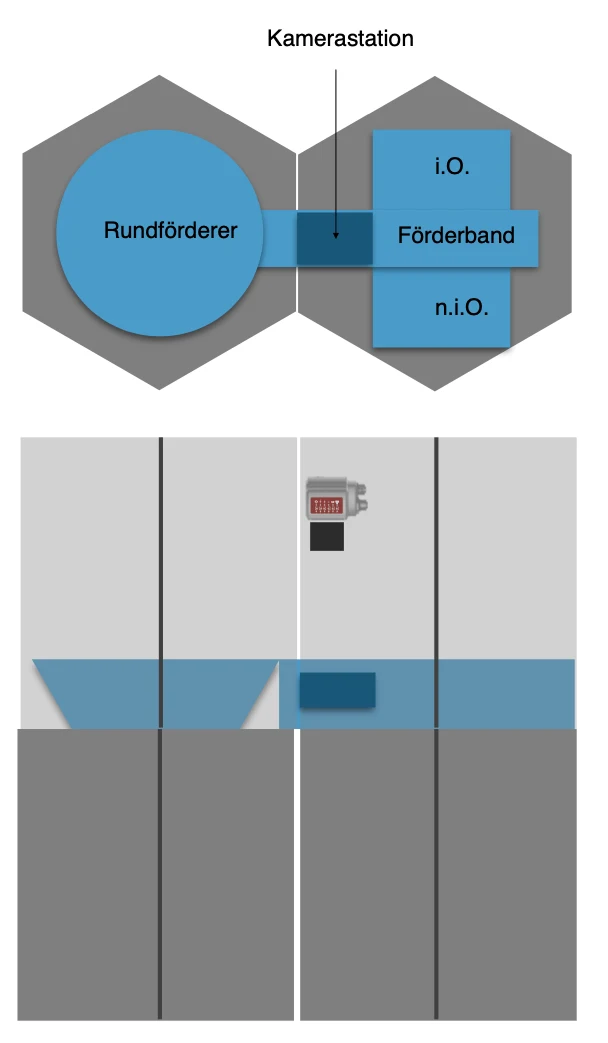
The turned parts are fed into a bowl feeder. From there, they are transferred to a
conveyor belt which conveys it past a camera station.
At this station, the parts are checked for diameter and length and sorted into good and bad parts via a soft one.
In addition, the good parts are counted so that the bag can be closed after 500 pieces each.
Request for this application →